Systems for clarity. Results by design.
Frameworks, workflows, and practical systems for better work in the age of AI.

![[background image] image of a serene office space (for a personal coach & consultant)](https://cdn.prod.website-files.com/image-generation-assets/4999a2a2-1889-446b-9c46-740db280a4c9.avif)
Frameworks, workflows, and practical systems for better work in the age of AI.
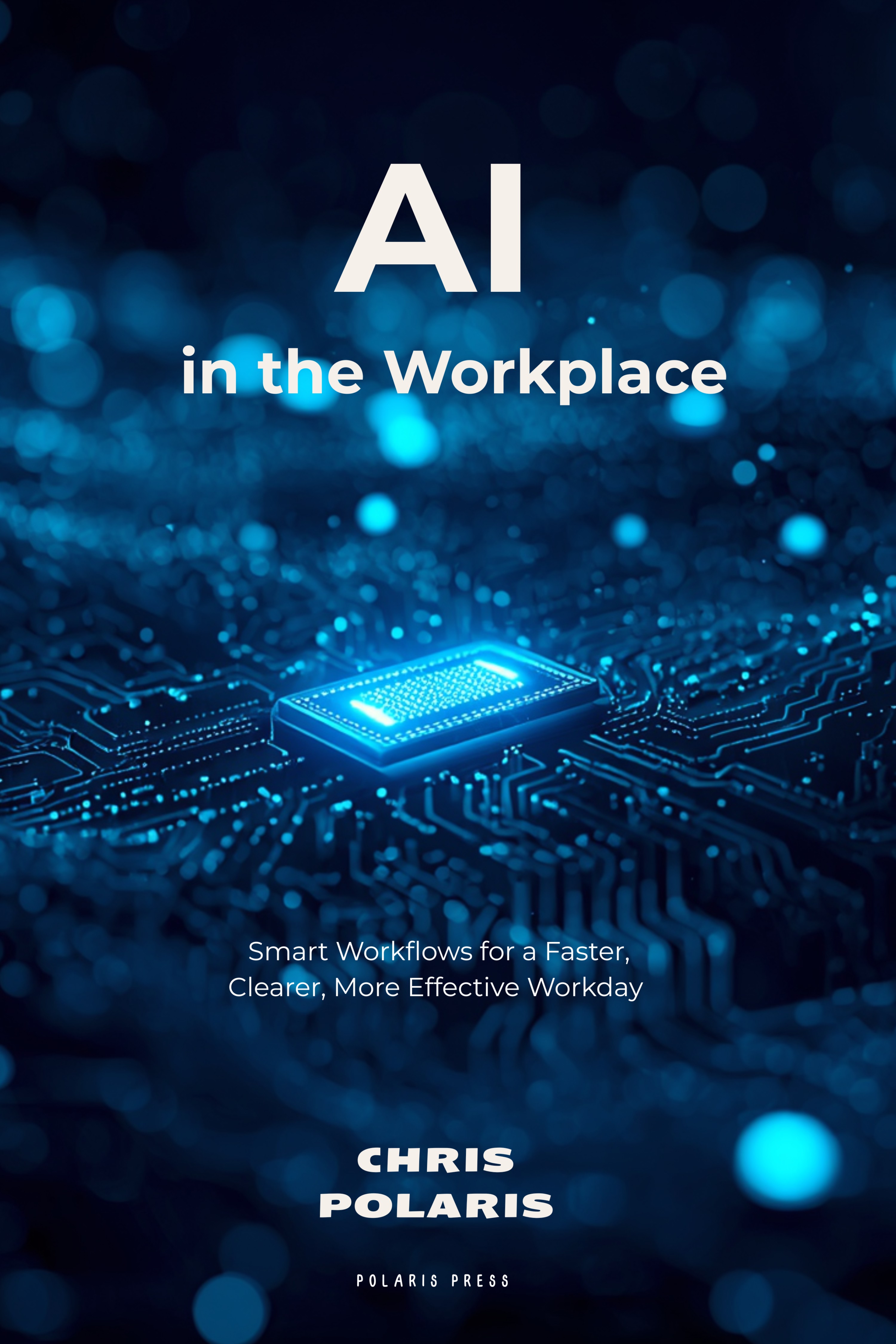
The operating manual for professionals who think for a living.
Most professionals do not need more capability.
They need fewer points where their capability gets stuck.
Modern work creates drag in places that are easy to miss.
An open decision that no one has closed.
A workflow that breaks at the same point every week.
A meeting that ends without a clear next step.
An interruption that forces the mind to rebuild context from scratch.
None of these seem expensive on their own.
Together, they change the quality of the day.
Attention fragments.
Judgment slows.
Work that should move forward keeps stopping at the same invisible walls.
AI does not fix this by replacing the professional.
It fixes this by removing the walls.
AI in the Workplace is a practical guide to identifying where friction forms, building systems that reduce it, and using AI as a support layer—not a substitute for the judgment that good work still requires.
Less friction.
Cleaner decisions.
Work that finally moves at the speed your thinking deserves.
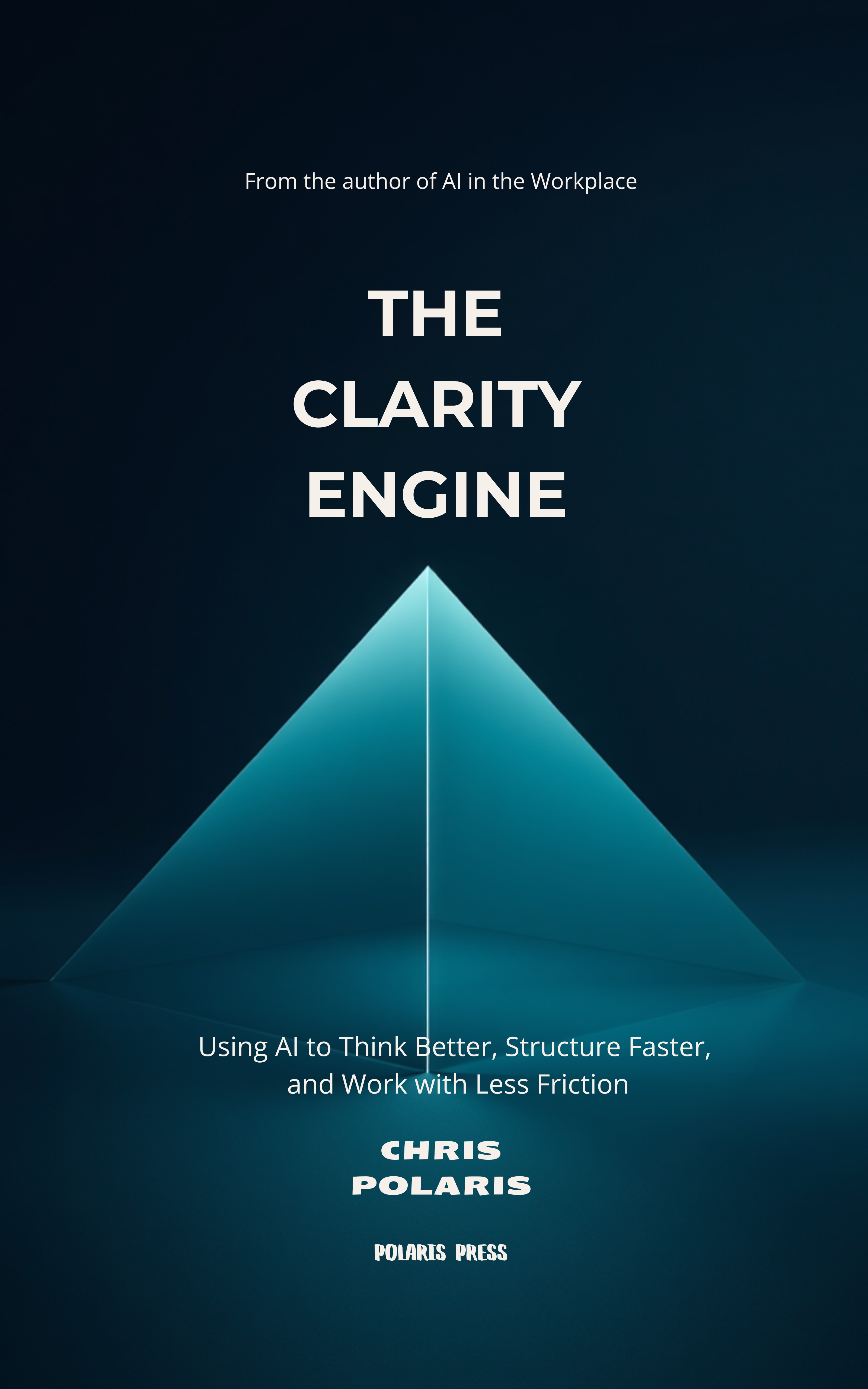
The practical framework for turning confusion into clarity.
Most professionals are not overwhelmed because they lack ability.
They are overwhelmed because clarity has a cost — and modern work charges it constantly.
Every decision that stays open drains attention.
Every meeting without a clear output creates residue.
Every priority that competes with three others slows judgment.
The problem is not the volume of work.
It is the absence of structure around it.
When everything feels equally important, nothing gets the focus it deserves.
The thinking happens.
The judgment is there.
But it cannot land cleanly because the surface underneath it is too cluttered to hold anything still.
The Clarity Engine is a practical system for changing that.
Not by doing less.
By thinking more clearly about what actually matters — and building the structure that lets decisions move instead of linger.
Less cognitive drag.
Cleaner decisions.
More focused execution.
Because clarity is not found.It is designed.

Why Evidence Is Replacing Credentials.
Most professionals are playing by rules that are quietly losing value.
Degrees.Job titles.Years of experience.
They still matter.
But they no longer create trust the way they once did.
Something shifted.
People can now see your thinking directly.Your decisions.Your judgment.The quality of your work in real time.
The credential used to speak for you.
Now your work has to.
The problem is that most professionals were never taught how to make their thinking visible.So strong capability stays hidden while weaker capability gets attention—not because the work is better, but because the signals are clearer.
The Proof Economy explains that shift.
Why trust is changing.What it now takes to build it.And how professionals can create visible evidence of their value without becoming performers or building a personal brand they do not believe in.
Your credentials got you here.Your evidence will take you further.

Using AI to Write More Clearly, Communicate Faster, and Reduce Friction at Work
Most professionals don't have a writing problem.
They have a conditions problem.
The follow-up that takes twenty minutes instead of five. The summary that stays unfinished because the structure never clicked. The message that sits in draft because the tone feels off and no one has time to fix it.
This is writing friction. And it costs more than time.
Writing AI is a practical system for reducing that friction at work without losing your voice, your judgment, or your responsibility for what you send.
You will learn how to move from rough notes to a usable draft faster. How to rewrite with direction instead of guessing. How to produce summaries and follow-ups that actually create movement. And how to build the kind of repeatable writing infrastructure that makes clear communication the default not the exception.
The book introduces the Draft Ladder, the Prompt-to-Draft Workflow, the Voice Reference, and a Daily Writing System designed for real workdays: fragmented attention, competing priorities, and never quite enough time.
AI does not do the writing. It reduces the cost of getting to clarity.
The thinking stays yours.
The ideas behind Writing AI build on a larger system of thinking about clarity, judgment, and AI-assisted work — explored further in The Clarity Engine and The Proof Economy.
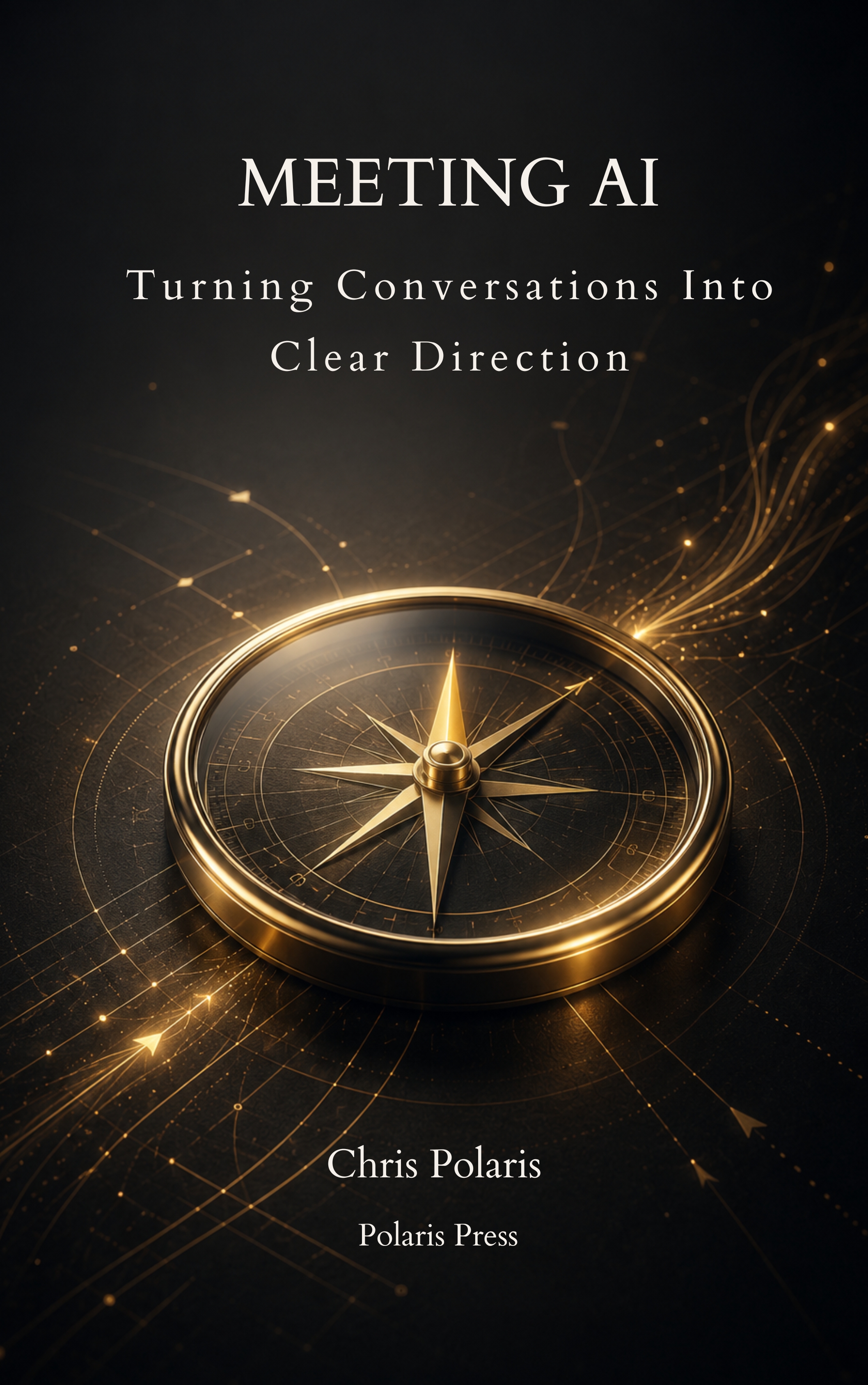
Using AI to Recover Signal, Sharpen Decisions, and Turn Discussion into Action
Most meetings do not fail in the room.
They fail afterward.
A decision sounds final, but three days later nobody can say exactly what was decided. A follow-up arrives, but ownership is still unclear everyone assumes someone else is handling it. Notes exist, but they have to be rebuilt from memory before anyone can actually use them.
None of this looks like failure while it's happening.
The conversation feels productive. People engage. Real issues get raised. The room seems aligned.
It looks like failure later in the rework, the re-explanation, the second meeting that exists only to clarify what the first one already should have settled.
This is the discussion-to-action gap: the distance between what was said and what can actually be used. And it is almost always more expensive than the meeting itself.
Most advice about meetings focuses on the wrong layer. Better agendas. Tighter facilitation. Fewer attendees. These things can help, but they don't solve the real problem because a well-run meeting can still produce weak output, and weak output still slows the work.
The deeper issue is conversion, not conversation.
What survives the meeting in a form people can actually act on?
That question is where this book begins.
Meetings AI is a practical system for closing the gap between discussion and action built around a method called signal recovery. Not capturing more. Recovering what matters before it gets buried in everything else that was said.
The book walks through how to separate decisions from commentary, how to convert rough notes and transcripts into usable structure, how to make ownership visible enough that work actually moves, and how to spot the failure modes that quietly make AI-assisted meeting notes unreliable summary illusion, false clarity, tone laundering before they become habit.
It also draws a clear line. AI can help compress, classify, and structure. It should not carry the judgment, the trust-sensitive conversations, or the responsibility for what gets decided. That stays human, every time.
What you build instead is something calmer: meetings that leave less behind.
Decisions that hold. Follow-up that actually closes the loop. Less residue, less re-explanation, less of the quiet exhaustion that comes from carrying half-finished conversations in your head.
Not faster meetings.
Meetings that work.
The system behind Meetings AI — recovering signal, making decisions visible, protecting judgment under pressure grows from the same thinking explored in The Clarity Engine and Writing AI: that clarity is not found, it is built, and that AI is most valuable not when it replaces judgment, but when it removes the friction around it.
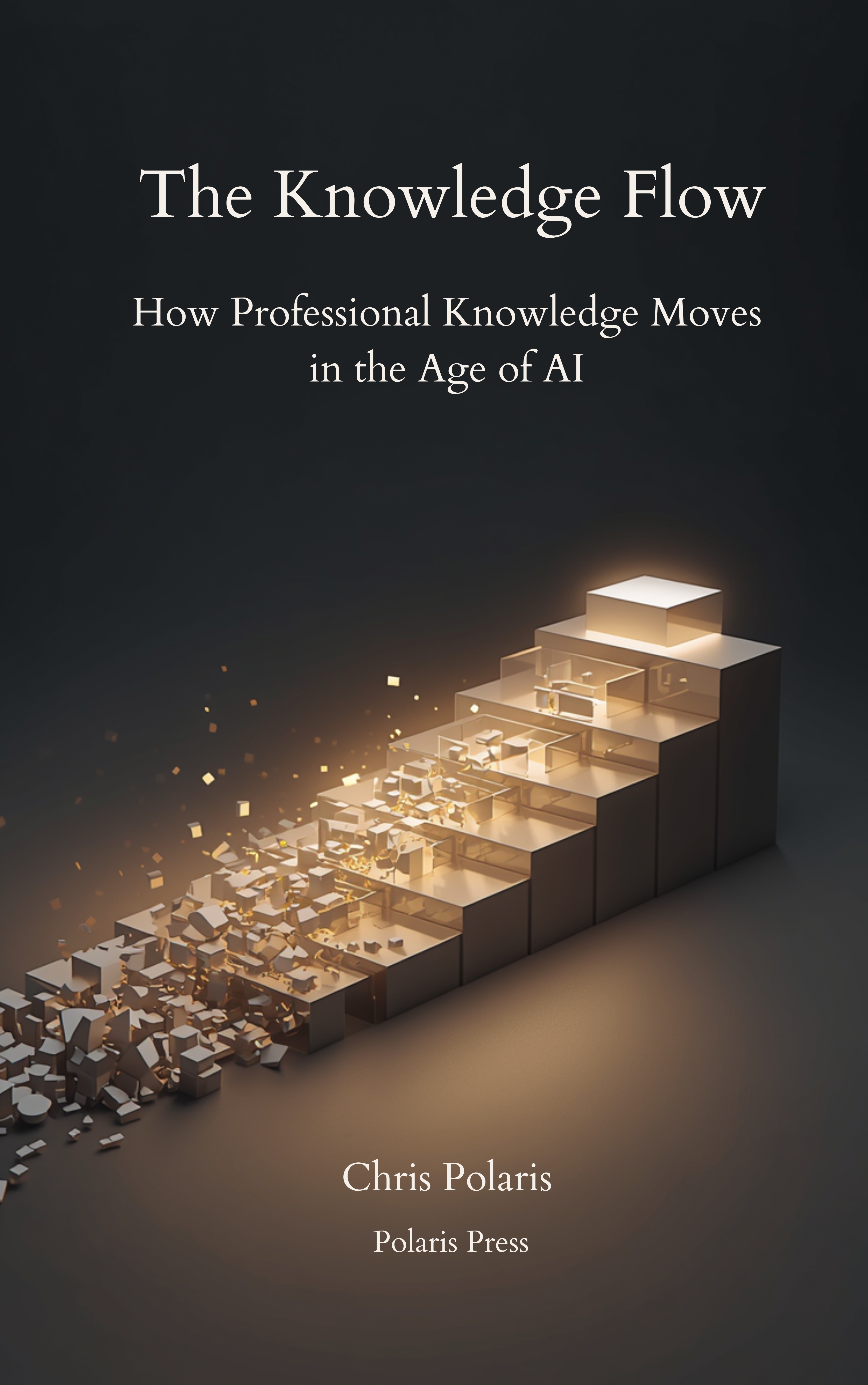
Knowledge only matters when it can move.
Most professionals are not short of knowledge.
They are slowed down by knowledge friction.
Reports, notes, meetings, ideas, research, drafts, decisions, and unfinished thoughts keep accumulating. The problem is rarely that nothing is known. The problem is that professional knowledge does not move cleanly enough to become structure, judgment, communication, and action.
The Knowledge Flow is a Polaris framework book about how knowledge moves through modern work — and where that movement breaks down.
It shows how AI can support the flow of knowledge without replacing human responsibility.
The book explores the hidden friction inside modern knowledge work: scattered information, weak handoffs, repeated rewriting, decision fog, meeting residue, unclear ownership, and information that never becomes usable.
Instead of treating AI as an output machine, The Knowledge Flow shows how to use AI as a support layer around thinking, writing, deciding, organizing, and acting.
Inside the book, you will explore the core Polaris concepts behind this system: the Friction Stack, the Draft Ladder, the Clarity Engine, Signal Recovery, the Decision Surface, the Responsibility Boundary, and the Personal AI Operating Layer.
This book also connects the wider Polaris system.
The Clarity Engine shows how messy input becomes clearer structure. Writing AI shows how thinking becomes visible through communication. Meeting AI shows how discussion becomes action. The Proof Economy shows why visible judgment and evidence are becoming more important than claims. The Knowledge Flow sits between them: it explains how professional knowledge moves across the whole system.
This is not another book about producing more AI output.
It is a book about reducing friction, recovering signal, improving judgment, and building a calmer operating layer around professional knowledge work.
Because knowledge only matters when it can move.

When AI delivers coherence before you have clarity, it upgrades the language of your confusion, not the quality of your thinking.
AI can help you produce answers faster.
But the real question is whether your thinking is getting better.
Thinking AI is a Polaris framework book about using artificial intelligence as a thinking partner, not an answer machine. It is written for professionals who want to use AI without handing over the part that matters most: judgment.
Most AI use starts too late. People bring AI a problem and ask for an answer. The output is fast, fluent, and often useful on the surface. But if the problem was poorly framed, the assumptions were never examined, or the trade-offs were not made visible, faster output only makes weak thinking move faster.
Thinking AI starts earlier.
It shows how AI can support the thinking process before the final answer appears: framing problems, widening perspective, compressing mental sprawl, comparing options, pressure-testing assumptions, and building stronger recommendations.
The book is built around a simple idea:
Better thinking produces better decisions.
Better decisions compound over time.
What the book helps you do
Use AI to frame problems before solving them.
Separate symptoms from causes.
Generate better angles without losing direction.
Turn scattered notes and ideas into usable structure.
Compare options more clearly.
Surface assumptions and blind spots before they become mistakes.
Build recommendations that can survive scrutiny.
Use AI as support without outsourcing responsibility.
The Thinking AI Loop
At the center of the book is the Thinking AI Loop:
Frame → Expand → Compress → Compare → Decide → Review
This is not a productivity routine. It is a repeatable way to stay present in your own thinking while using AI to support the parts that benefit from structure, pressure-testing, and perspective.
The goal is not to think faster once.
The goal is to think better, repeatedly.
Who this book is for
Thinking AI is for professionals, managers, consultants, founders, operators, writers, analysts, and knowledge workers who use AI in real work and want stronger thinking behind the output.
t is especially useful if you use AI for planning, decisions, analysis, writing, strategy, recommendations, or problem solving and you want to make sure the tool is improving your judgment rather than quietly replacing it.
What this book is not
This is not a prompt hacks book.
It is not about automating your thinking.
It is not about getting AI to produce more content faster.
Thinking AI is about building better thinking conditions: clearer frames, better questions, stronger comparisons, more visible assumptions, and more responsible decisions.
AI can generate answers.
Judgment is still yours.
Part of the Polaris framework
Thinking AI is part of the Chris Polaris body of work on clarity, decision quality, proof, responsibility, and human judgment under modern system pressure.
Where The Clarity Engine focuses on reducing work friction, Writing AI focuses on communication, Meeting AI focuses on turning conversations into direction, and The Knowledge Flow focuses on how knowledge moves, Thinking AI focuses on the reasoning layer underneath them all.
It asks a simple but
demanding question:
When AI helps you move faster, is your thinking becoming stronger too?
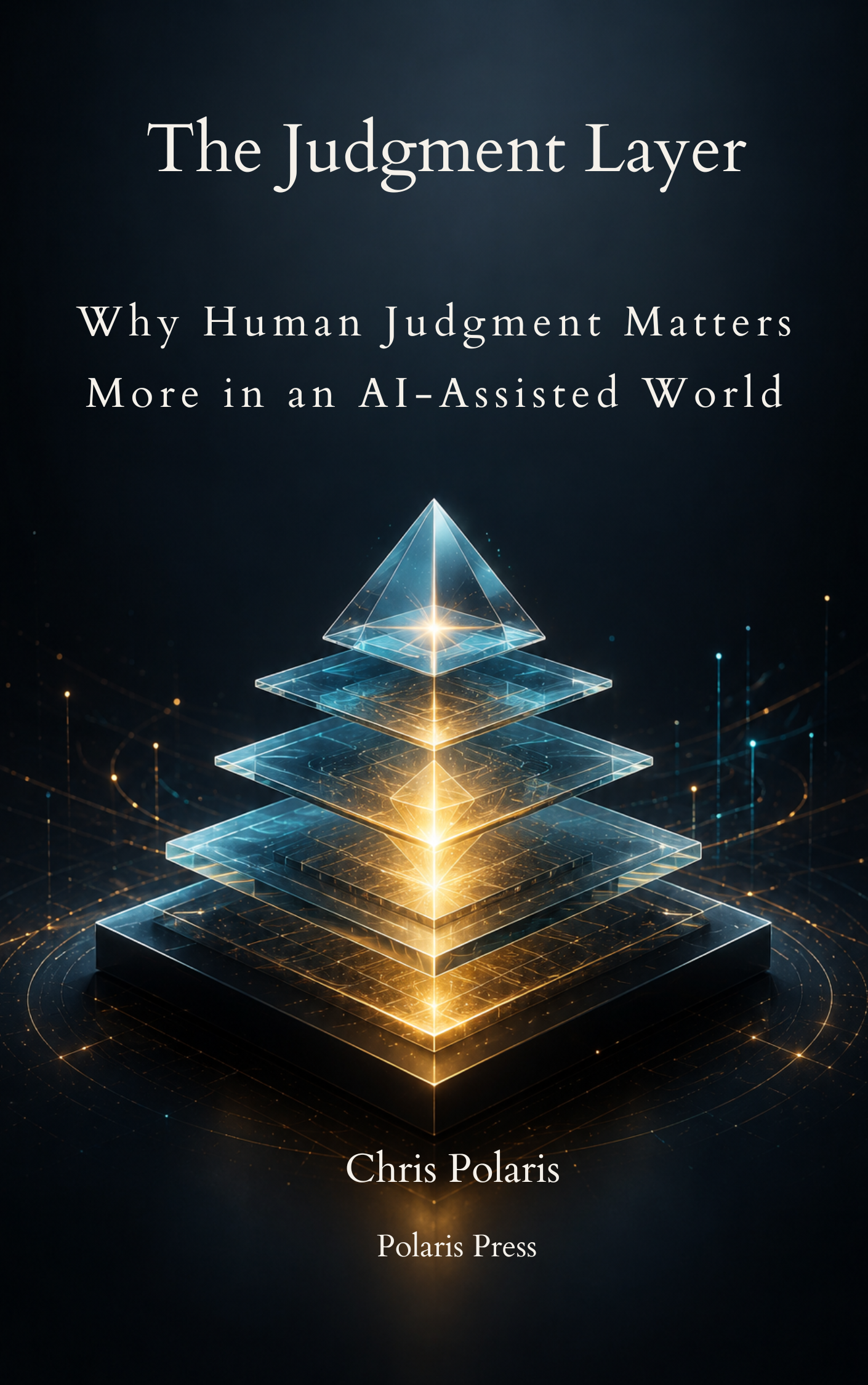
AI can assist the work. It cannot carry the consequence.
AI can generate faster answers.
But faster answers do not automatically produce better decisions.
As artificial intelligence enters more meetings, documents, workflows, recommendations, and leadership processes, the central question is no longer whether AI can help produce output. It can.
The harder question is whether the judgment behind that output remains visible, accountable, and human.
The Judgment Layer is a Polaris framework book about what becomes more important when AI becomes more capable: human judgment.
Most AI use focuses on speed. Faster summaries. Faster drafts. Faster analysis. Faster recommendations. But when speed increases without stronger judgment, organizations can confuse fluency with truth, coherence with clarity, and automation with accountability.
A polished answer can still be built on a poorly framed problem.
A confident recommendation can still hide weak assumptions.
A clean summary can still erase the disagreement that mattered.
A fast decision can still leave no clear owner.
This is where the Judgment Layer matters.
The Judgment Layer is the human and organizational layer that sits between AI capability and real-world decisions. It determines how problems are framed, how assumptions are tested, how trade-offs are made visible, how responsibility is preserved, and how decisions remain accountable after AI has helped produce the output.
The book explores the hidden failure modes of AI-assisted work: decision fog, ownership drift, false clarity, responsibility gaps, weak decision surfaces, and the danger of treating polished output as proof of sound thinking.
It shows why leaders, managers, professionals, and teams need more than better AI tools.
They need better decision architecture.
They need responsibility boundaries.
They need systems that keep human judgment attached to the choices that matter.
What the book helps you see.
Recognize when AI output is clear but the thinking underneath is not.
Separate faster production from better judgment.
Identify decision fog before it becomes organizational confusion.
Notice ownership drift when AI-assisted work makes responsibility harder to locate.
Protect the responsibility boundary between what AI can assist and what humans must still own.
Build cleaner decision surfaces before recommendations are made.
Use AI without allowing accountability to dissolve into the system.
The core idea.
AI does not remove the need for judgment.
It increases the importance of the layer where judgment happens.
When AI makes output easier, the real value moves upstream: into framing, interpretation, responsibility, trade-offs, ownership, and decision quality.
The Judgment Layer is not about resisting AI.
It is about using AI seriously without becoming careless with the human layer that makes work trustworthy.
Who this book is for
The Judgment Layer is for leaders, managers, founders, operators, consultants, analysts, knowledge workers, and professionals who use AI in real work and want stronger judgment behind the output.
It is especially useful if you use AI for planning, decisions, strategy, recommendations, communication, analysis, meetings, or organizational work and want to make sure the tool is improving your judgment rather than quietly replacing it.
What this book is not
This is not a prompt hacks book.
It is not a technical AI manual.
It is not an anti-AI argument.
It is not about slowing down work for the sake of caution.
It is about building the human structure that allows AI-assisted work to remain clear, responsible, and trustworthy.
AI can assist the work.
But judgment still has to belong somewhere.
This book is about building that place.
Part of the Polaris framework
The Judgment Layer is part of the Chris Polaris body of work on clarity, decision quality, responsibility, proof, continuity, and human judgment under modern system pressure.
Where Thinking AI focuses on improving the reasoning layer before the answer appears, The Judgment Layer focuses on the responsibility layer that determines whether AI-assisted work can be trusted.
Where The Proof Economy explains why visible evidence and demonstrated judgment matter more than claims, The Judgment Layer explains how that judgment must remain attached to decisions.
Where The Memory Layer preserves continuity across interrupted work, The Judgment Layer preserves accountability across assisted work.
Where The Knowledge Flow explains how knowledge moves through a system, The Judgment Layer explains how judgment must stay present while that movement accelerates.
The book asks a simple but demanding question:
When AI makes work easier to produce, what keeps the decision worthy of trust?

Memory stores information. Systems store progress.
Modern work does not usually fail because people lack information.
It fails because progress gets lost between sessions.
Files are stored. Notes are saved. Meetings are summarized. Messages are searchable. But every day, professionals return to unfinished projects and spend valuable time reconstructing what they already understood before the interruption.
The work is there.
The context is not.
The Memory Layer is a Polaris framework book about one of the most overlooked costs in modern professional work: the cost of constantly rebuilding context before useful work can continue.
This hidden cost is the Recall Tax.
It appears every time you reopen a project and have to remember where you stopped, what changed, what was decided, why the decision was made, what remains unclear, and what should happen next.
Most people treat this as a normal part of work.
It is not.
It is a system failure.
Memory is powerful, but memory is not a work system. The human mind is good at meaning, judgment, intuition, and experience. It is not designed to carry the current state of every unfinished project, decision, handoff, and open loop indefinitely.
That is what systems are for.
The Memory Layer explains why information is not the same as progress, why notes are not the same as continuity, and why modern professionals and teams need a dedicated layer for preserving state, decisions, reasoning, open questions, and next visible steps.
The book shows how to stop relying on human memory to carry unfinished systems and start designing work so progress can survive interruption.
What the book helps you see
Recognize the Recall Tax before it quietly drains your workday.
Understand why information storage does not solve the continuity problem.
Separate what belongs in personal memory from what belongs in system memory.
Reduce re-entry cost when returning to unfinished work.
Capture decisions, reasoning, open questions, and next steps before they disappear.
Build clearer handoffs between sessions, people, and projects.
Prevent shared memory decay inside teams.
Use AI as continuity support instead of treating it as a replacement for thinking.
The core idea
Memory stores what happened.
Systems store what can continue.
The Memory Layer is not about remembering more.
It is about designing work so less has to be remembered.
When progress is captured clearly, the next session does not begin with reconstruction. It begins with continuation.
That distinction changes everything.
The Progress Capture Method
At the center of the book is a simple practice: the Progress Capture Method.
At the end of a meaningful work session, capture five things:
Where did I stop?
What changed?
What did I decide?
What remains unclear?
What is the next visible step?
This takes only a few minutes.
But it changes the next session completely.
Instead of returning to scattered notes, old messages, half-remembered decisions, and unclear next steps, you return to a clean state record. The thread is still there. The work can continue without being rebuilt.
The goal is not more documentation.
The goal is less reconstruction.
Who this book is for
The Memory Layer is for professionals, managers, creators, consultants, founders, operators, analysts, knowledge workers, and teams who work across interrupted projects and want their progress to compound instead of reset.
It is especially useful if your work involves planning, writing, decisions, meetings, strategy, research, client work, project management, knowledge management, or AI-assisted workflows.
If you often return to work and spend the first twenty minutes remembering what you already knew, this book is for you.
What this book is not
This is not a book about building a complicated second brain.
It is not a note-taking manual.
It is not a productivity hack.
It is not about capturing everything.
The Memory Layer is narrower and more useful: it captures what is needed to continue.
Not every thought.
Not every file.
Not every note.
The current state. The decision. The reasoning. The open question. The next visible step.
That is the layer that keeps work alive between sessions.
AI as continuity, not replacement
The Memory Layer also reframes one of the most valuable uses of AI in modern work.
AI should not replace the thread.
It should help preserve it.
Used well, AI can summarize where things stand, recover prior decisions, surface repeated patterns, clarify unresolved questions, and help a returning worker reconnect with their own thinking faster.
The best AI memory system does not think for you.
It helps you return to your own thinking faster.
That is the difference between AI as an output machine and AI as continuity infrastructure.
Part of the Polaris framework
The Memory Layer is part of the Chris Polaris body of work on clarity, decision quality, knowledge flow, responsibility, proof, and human judgment under modern system pressure.
Where The Knowledge Flow explains how professional knowledge moves through a system, The Memory Layer explains how that movement survives interruption.
Where The Clarity Engine reduces friction inside work, The Memory Layer reduces the friction of returning to work.
Where Thinking AI strengthens the reasoning layer, The Memory Layer preserves the thread that reasoning depends on.
Where The Judgment Layer protects accountability in AI-assisted work, The Memory Layer protects continuity across interrupted work.
The book asks a simple but demanding question:
Are you asking your memory to hold what only a system can hold?
If the answer is yes, the fix is not more effort.
It is a Memory Layer.
Memory stores information.
Systems store progress.
Build the layer. Let the progress compound.

Most people do not need a smarter home. They need a lighter one.
AI should not make home life more complicated.
It should make it easier to carry.
AI at Home is a practical Polaris framework book about using artificial intelligence in everyday household and family life without turning the home into another performance system.
Most people do not need a smarter home.
They need a lighter one.
The real problem inside many households is not a lack of effort. It is recurring friction: forgotten details, scattered messages, repeated decisions, school information spread across too many places, grocery planning that restarts every week, unfinished loops that stay in one person’s head, and small coordination problems that keep returning.
AI at Home shows how to use AI as a support layer around ordinary life: not to replace human judgment, not to automate care, and not to optimize the family into a dashboard, but to reduce the unnecessary burden that makes home life heavier than it needs to be.
Inside, Chris Polaris introduces a clear way to think about home friction: memory friction, coordination friction, decision friction, learning friction, and residue friction.
The book shows why many household problems are not motivation problems.
They are structure problems.
A parent does not need more pressure.
A family does not need more tools.
A home does not need another system that only works when everyone has energy.
What it needs is small, reliable support placed exactly where friction repeats.
AI at Home explains how to build that support layer in a calm, practical way: shared weekly views, simple decision prep, school summaries, family dashboards, recurring task templates, grocery and meal planning support, and household resets that make the week easier to enter.
This is not a book about smart devices.
It is not a book about automating family life.
It is not about doing more.
It is about carrying less.
The goal is not a perfect household operating system.
The goal is a home where fewer things depend on memory, fewer decisions float unresolved, fewer details are lost between people, and fewer small burdens silently accumulate.
AI can help with that.
But only if it is used in the right role.
AI can summarize, organize, compare, remind, structure, and reduce repeated planning work.
It cannot decide what matters.
It cannot replace care.
It cannot know the emotional weight of a family situation.
It cannot carry responsibility for the people inside the home.
That is why this book keeps human judgment at the center.
What the book helps you see
Recognize where household friction is actually forming before adding another tool.
Separate useful support from unnecessary automation.
Reduce mental load without treating care as a system problem to be optimized away.
Build shared weekly views that make family coordination easier.
Use AI to summarize school information, household details, recurring tasks, and family logistics.
Bring repeated family decisions to a clearer close.
Create simple household resets that make ordinary weeks easier to enter.
Protect the boundary between what AI can organize and what humans must still decide.
The core idea
A better home is not one that becomes automated.
It is one that becomes easier to carry.
AI at Home is built around a simple principle: relief, not optimization.
The purpose of AI in the home is not to make family life faster, colder, or more mechanical. The purpose is to remove unnecessary friction so more attention is available for the things only people can give: care, presence, judgment, patience, warmth, and meaning.
A home that carries less is not a home that cares less.
It is a home where unnecessary friction has been removed so the people inside it have more of themselves left over for what actually matters.
Who this book is for
AI at Home is for parents, partners, caregivers, professionals, families, and anyone carrying the quiet operational weight of household life.
It is especially useful if you are the person who remembers what needs to happen, follows up on the details, keeps track of school information, notices what is missing, makes the recurring decisions, and holds the unfinished loops in your head.
If home life often feels heavier than it should, this book gives you a calmer way to see what is happening and a practical way to reduce the load.
What this book is not
This is not a smart-home gadget guide.
It is not a parenting manual.
It is not a productivity system that asks your family to become more disciplined.
It is not a book about automating care.
It is not about replacing human judgment with AI.
AI at Home is about using AI carefully, practically, and humanely as a support layer around household life.
The point is not to build a perfect system.
The point is to make the week easier to carry.
AI as support layer, not replacement
AI is useful at home when it helps with the parts of household life that create repeated friction.
It can help organize scattered information.
It can turn school messages into usable summaries.
It can help compare options before a family decision.
It can create a grocery or meal-planning structure.
It can help turn recurring tasks into simple templates.
It can help recover from a drifted week without guilt.
But AI should not become the decision-maker inside the home.
It should not replace care.
It should not flatten emotional judgment.
It should not make family life feel managed by a machine.
The right role for AI is support.
The human role is meaning, care, judgment, and responsibility.
Part of the Polaris framework
AI at Home is part of the Chris Polaris body of work on clarity, decision quality, memory, workflow friction, responsibility, proof, and human judgment under modern system pressure.
Where The Clarity Engine reduces friction in professional work, AI at Home applies the same logic to ordinary household life.
Where The Memory Layer explains why systems should store progress instead of asking human memory to carry everything, AI at Home shows how the same problem appears inside the home.
Where The Knowledge Flow explains how knowledge moves through professional systems, AI at Home shows how household information needs to move clearly between people.
Where The Judgment Layer protects responsibility in AI-assisted work, AI at Home protects the human boundary inside family life.
The book asks a simple but demanding question:
What would home life feel like if fewer things had to be carried in one person’s head?
That is the work of AI at Home.
Not a smarter home.
A lighter one.

Speed can improve output. Only formation builds judgment.
AI can make work faster.
But faster output does not automatically build better judgment.
Faster Is Not Wiser is a practical Polaris framework book about one of the most important questions of the AI era:
What happens when people begin producing professional-looking work before the capability behind that work has fully formed?
AI now allows professionals to bypass parts of the learning process that previous generations could rarely avoid.
The output may improve.
The person may not.
That is the difference this book explores.
Faster Is Not Wiser introduces a practical vocabulary for understanding how human judgment is actually built: the Formation Period, Load-Bearing Difficulty, Borrowed Competence, the Formation Loop, the Formation Window, and Apprenticeship Debt.
These are not abstract theories.
They are practical ways to recognize when AI is helping someone grow — and when it is quietly replacing the very experiences that growth depends on.
The central distinction is simple.
Some difficulty is useless.
Some difficulty is essential.
AI should remove the first.
It should protect the second.
Throughout the book, Chris Polaris explains why judgment has never been downloaded, copied, or transferred from one person to another.
It has always been formed.
Slowly.
Through repeated contact with real uncertainty, real consequences, real feedback, and real responsibility.
The danger today is not that AI produces poor work.
Often, it produces excellent work.
The danger is that polished output can hide an unfinished formation process.
From the outside, competence appears to exist.
Inside, it has never been built.
That gap remains invisible until the first situation where no prompt, template, or previous example exists.
That is where real judgment begins.
Inside the book
Understand why speed and wisdom are not the same thing.
Learn to separate Load-Bearing Difficulty from friction that should simply disappear.
Recognize Borrowed Competence before it becomes a long-term weakness.
Protect Formation Windows while they are still open.
Avoid accumulating Apprenticeship Debt inside teams and organizations.
Build AI workflows that strengthen judgment instead of replacing it.
Who this book is for
Faster Is Not Wiser is written for professionals, managers, mentors, educators, founders, and anyone developing people in an AI-assisted world.
It is especially relevant for organizations that care not only about today's output, but tomorrow's capability.
If AI is becoming part of your work, this book helps you decide where acceleration belongs — and where human development must remain intentionally protected.
The core idea
AI should remove unnecessary work.
It should not remove the experiences that create human judgment.
Speed is valuable.
Capability is irreplaceable.
The professionals who understand that distinction will build stronger careers, stronger teams, and stronger organizations long after today's tools have changed.
Part of the Polaris framework
Faster Is Not Wiser extends the Polaris framework into one of its most important questions: how capability is formed under AI acceleration.
Where The Judgment Layer explains why human judgment matters, Faster Is Not Wiser explains how that judgment is built.
Where The Clarity Engine improves thinking, Faster Is Not Wiser protects the process that creates better thinkers.
Where The Proof Economy explains why evidence replaces credentials, Faster Is Not Wiser explains where that evidence originally comes from.
This book is about protecting the part of human development that no technology can generate on our behalf.
Because faster can improve output.
Only formation builds judgment.